
Lymphedema Treatment in Riyadh: Symptoms, Manual Lymphatic Drainage Massage & Home Care Guide
It may start with swelling in your hand or leg that doesn’t seem particularly worrying. Perhaps one arm feels slightly heavier than usual, or you notice that your watch, ring, or clothing suddenly feels tighter.
But when the swelling persists or keeps coming back, it may be more than temporary fluid retention.
Lymphedema happens when lymph fluid builds up in the tissues because the lymphatic system is unable to drain it properly. It most commonly affects an arm or leg. Recognizing the symptoms early and getting appropriate care can help manage swelling, improve comfort, and reduce the risk of complications.
Direct Answer
Lymphedema treatment in Riyadh depends on the cause, severity, and area affected. Treatment may include manual lymphatic drainage, compression garments or bandaging, appropriate exercise, and skin care. For certain advanced cases or when conservative treatment is not sufficient, surgical options may also be considered. The right approach begins with assessing the cause of the swelling rather than assuming that massage alone will solve it.
Key Takeaways
Lymphedema is not simply ordinary swelling; it develops when lymph fluid does not drain properly.
Early symptoms can include mild swelling, heaviness, tightness, or reduced movement in an arm or leg.
Manual lymphatic drainage is a gentle, specialized technique—not a deep or forceful massage.
Lymphedema management often combines several approaches rather than relying on one treatment.
Redness, warmth, pain, or swelling accompanied by fever should be medically assessed promptly.
What Is Lymphedema and Why Does It Cause Swelling?
The lymphatic system is a network of vessels and lymph nodes that transports lymph fluid and plays an important role in immune function. When part of this system is damaged or lymph flow becomes impaired, fluid can begin to accumulate in the tissues, causing lymphedema.
Lymphedema may be primary, resulting from an abnormality in the development or function of the lymphatic system itself, or secondary, meaning another condition or treatment has damaged the lymphatic vessels or nodes.
Known causes of secondary lymphedema include surgical removal of lymph nodes, radiation therapy, and tumors that interfere with lymphatic drainage. This is why lymphedema is often discussed in relation to cancer treatment, although cancer treatment is not its only cause.
How Do I Know If My Swelling Could Be Lymphedema?
Not every swollen foot, leg, hand, or arm is caused by lymphedema. Swelling has many possible causes, and some require a completely different approach to diagnosis and treatment.
With lymphedema, you may notice that one limb looks larger than the other or experience a feeling of heaviness, fullness, or tightness. Movement may gradually become less comfortable, and changes in the texture or thickness of the skin can occur as the condition progresses.
Signs worth paying attention to include:
Persistent or recurring swelling in an arm or leg, sometimes extending into the fingers or toes
A feeling of heaviness, fullness, or tightness
Reduced or uncomfortable movement
Gradual changes in the texture or thickness of the skin
Most importantly, if you develop new swelling without a known cause, don't try to diagnose it yourself. Understanding why the swelling is happening should come before deciding how to treat it.
Why Can Lymphedema Develop in the Arm After Breast Cancer Treatment?
This is one of the situations in which many people first hear about lymphedema.
Some breast cancer treatments involve removing lymph nodes from the underarm area or treating the area with radiation. When lymph nodes or lymphatic vessels are affected, drainage from the hand, arm, or chest may become less efficient.
However, a history of breast cancer surgery does not mean that every episode of arm swelling is lymphedema. Symptoms may also appear months or even years after treatment, which is why new or persistent swelling should be assessed rather than ignored.
What Does Lymphedema Treatment in Riyadh Involve?
There is one common misconception worth clearing up: lymphedema treatment is not simply one massage session that makes the problem disappear.
Lymphedema is often a chronic condition. Treatment generally aims to reduce swelling, improve movement and comfort, lower the risk of complications, and help maintain these improvements over time.
One commonly used approach is complete decongestive therapy. Depending on the individual, this may combine manual lymphatic drainage, compression through garments or bandages, exercise and movement, and careful skin care.
There is no single treatment plan that works for everyone. The affected limb, severity and cause of swelling, condition of the skin, previous treatments, and overall health can all influence the treatment plan.
What Is Manual Lymphatic Drainage Massage?
When you hear the word “massage,” you might imagine firm pressure being applied to tight muscles. Manual lymphatic drainage is different.
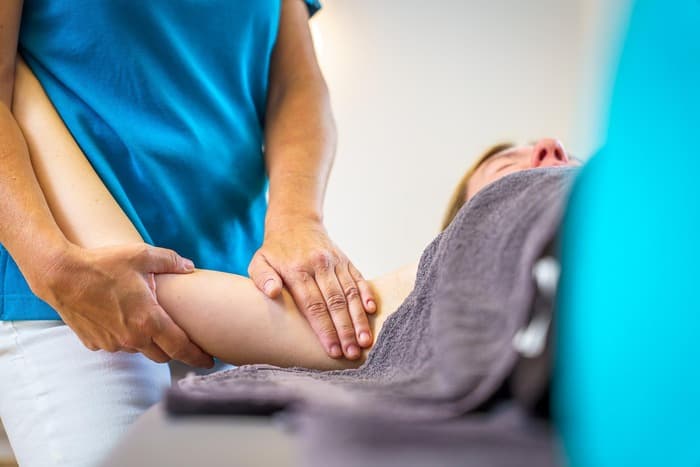
It uses gentle, specialized movements designed to encourage lymph fluid to move toward areas where the lymphatic system can drain it more effectively.
This means stronger pressure does not necessarily produce a better result. The technique requires an understanding of lymphatic pathways and the person's condition, which is why it should ideally be performed by a professional trained in lymphedema management.
Manual lymphatic drainage is also not suitable in every situation. For example, a skin infection or blood clot requires medical assessment rather than simply starting massage.
Is Lymphatic Drainage Massage Enough on Its Own?
In many cases, no.
Manual lymphatic drainage can be an important part of treatment, but controlling lymphedema often requires more than one approach.
A specialist may recommend an appropriately fitted compression sleeve or stocking, bandaging during certain stages of treatment, exercises that use muscle movement to support lymphatic flow, and ongoing skin care.
An easy way to think about it is this: massage can help encourage fluid movement, while the other parts of the treatment plan help maintain the improvement and reduce the chance of fluid accumulating again.
Can You Manage Lymphedema at Home?
Part of lymphedema management can often continue at home, but only after you understand what is appropriate for your individual condition.
Home care may include wearing compression garments as instructed, continuing recommended exercises, taking care of the skin, and sometimes learning simple self-drainage techniques from a trained professional.
Watching a lymphatic massage video online and trying it on unexplained swelling, however, is not a good starting point. New swelling should first be properly assessed.
What Can You Do Every Day?
Keep your skin clean and moisturized and pay attention to cuts, scratches, or unusual skin changes. Protecting the skin is particularly important because infections can cause additional problems in a limb affected by lymphedema.
Movement also matters. Muscle contractions during physical activity can support lymph movement, which is why suitable exercises may form part of a lymphedema management plan.
If you have been advised to wear a compression garment, the correct size, pressure, and way of wearing it matter. Choosing an arbitrary compression product without professional guidance is not the same as using one selected for your condition.
Should You Elevate a Swollen Arm or Leg?
Elevating the affected limb may help some people as part of their overall lymphedema management, but it should not be viewed as a replacement for treatment.
Elevation alone may not be enough to control established lymphedema. It is better considered one possible part of day-to-day care rather than a standalone solution.
Is There Anything You Should Avoid With Lymphedema?
Living with lymphedema does not mean you need to be constantly worried about the affected limb. The goal is to reduce avoidable irritation, injury, and infection.
Try to protect the skin from cuts and burns and avoid exposing the affected area to excessive heat. If compression garments are part of your treatment, make sure they are appropriately fitted for your condition.
It is also important not to assume that every type of massage is suitable. Deep, forceful massage is different from specialized manual lymphatic drainage.
When Is Surgical Treatment of Lymphedema Considered?
Surgery is not usually the first treatment for lymphedema. However, surgical treatment of lymphedema may be considered for selected patients after specialist assessment, particularly when conservative management has not provided sufficient improvement or the condition has become more advanced.
Several surgical techniques are available. Some procedures create new pathways for lymphatic drainage by connecting small lymphatic vessels to nearby blood vessels. Another option involves transferring healthy lymph nodes to the affected area.
In some cases of long-standing lymphedema where fatty tissue has accumulated, liposuction may be considered to reduce the size of the affected limb.
The decision to have surgery is not based on the amount of swelling alone. The type and stage of lymphedema, condition of the lymphatic vessels, previous treatments, and the person's overall health can all influence whether surgery is appropriate.
If you are considering surgical treatment of lymphedema, the first step is therefore a specialist assessment to determine whether surgery is appropriate and which procedure, if any, may suit your condition.
Manual Drainage, Compression or Surgery: What's the Difference?
There is no single “best” option in this table. The appropriate treatment depends on the individual, and several approaches may be used together rather than as alternatives to one another.
What Does Arm Lymphedema Treatment Involve?
Arm lymphedema treatment follows the same general principles of reducing swelling, supporting lymphatic drainage, maintaining movement, and protecting the skin.
Depending on the individual, treatment may involve manual lymphatic drainage, a properly fitted compression sleeve, exercise, and skin care. The approach can vary depending on the cause and severity of the swelling and whether it developed after surgery, radiation therapy, or for another reason.
For someone who has previously undergone breast cancer treatment, new arm swelling deserves particular attention. Rather than assuming it is lymphedema, an assessment can help establish the cause and determine the appropriate next step.
When Does Swelling Need Prompt Medical Attention?
There is a difference between stable, previously diagnosed swelling and a sudden change that needs medical attention.
If the swollen area becomes red, warm, or painful, particularly if you also develop a fever, this may indicate an infection that needs prompt treatment. New or sudden swelling that has not previously been diagnosed as lymphedema should also be assessed to determine its cause.
This matters because treating unexplained swelling as lymphedema before knowing its cause could delay the diagnosis of another condition requiring different care.
Where Can You Find Lymphedema Massage in Riyadh?
If you are looking for lymphedema care in Riyadh, it is important to distinguish specialized lymphatic drainage from a regular massage.
Valeo Health provides access to physiotherapy services in Riyadh, including lymphedema massage. If your swelling is new or its cause has not yet been diagnosed, however, you may need an appropriate medical assessment first to establish whether lymphatic drainage is suitable for you.
Don't Assume Persistent Swelling Is “Just Fluid Retention”
Perhaps one of the most useful things you can do with lymphedema is notice changes early rather than waiting until swelling becomes difficult to ignore.
If an arm or leg feels unusually heavy, one limb looks different from the other, or swelling begins after surgery or treatment involving the lymph nodes, getting it assessed can help identify the cause and guide the next steps.
For people looking for lymphedema treatment in Riyadh, Valeo Health provides access to physiotherapy and lymphedema massage services. Managing lymphedema is not simply about reducing swelling during one session; it is about understanding the condition and learning how to manage it in everyday life.
Medical References
Medical Review
Dr. Rayan Mohammed
General Practitioner
Dr. Rayan Mohammed is a functional medicine physician and regenerative medicine specialist focused on root-cause diagnosis and metabolic health optimization. She takes a personalized approach to patient care, with an emphasis on understanding underlying health factors and supporting long-term wellbeing.
Medically reviewed by: Dr. Rayan Mohammed, General Practitioner